"For several years in a row, I’ve made a New Year’s resolution to waste less food."
The first couple of years, I made a feeble effort which consisted of trying to be better and mindful about eating leftovers, making smaller grocery runs for fruits and vegetables so they don’t spoil and simple actions like that. Sure, I wasn’t throwing away bins full of food but I didn’t feel like I was moving the needle on my own food waste reduction.
After thinking my resolution through and what it could take for me to make serious strides to change the way I envisioned, I realized I had no way of holding myself accountable. I felt only guilt with no other consequence when I threw away food. I have many reasons for not wanting to waste food–climate change and the environment are the most important reasons.
Climate change and food waste are intertwined in many complex ways. American households waste 27 million tons of food every year, and about 35% of food that’s produced in America never makes it off grocery shelves and goes unsold or does make it off the shelf and is uneaten. Growing, transporting, and selling food takes countless resources including water, energy, labor, and fuel.
When food is wasted, embedded resources are wasted, too.
This mass waste leads to the creation of a larger carbon footprint and more water scarcity. Sometimes food gets composted, which is great, but the majority of wasted food is transported to an already overflowing landfill. Right there is the cost of transportation again –and something to continue thinking about and realizing is how in every part of the supply chain, there are expended resources and from there, resources that get wasted. Asking how our impact can lessen this waste is critical.
Food waste makes up nearly 25% of solid waste in landfills which can lead to increased methane emissions and infrastructure problems, such as a landfill reaching capacity. If that occurs, then more land is needed to create another landfill. Creating another landfill takes more resources and more resources puts a strain on an already strained system and already strained planet.
So, after all that doom and gloom, I continuously ask myself, what can I do about it and I hope you’re asking yourself the same question. As a collective, what can we do about it? We each have the power to create and make positive change. We just need to start and take action.
I created tools to help me understand how and why I was wasting my food so that I could fix the problem, and I’m sharing them with you with the hope that they’ll help you too. Please steal these ideas, share them far and wide and use them often!
Create a “What’s in the Fridge” list.
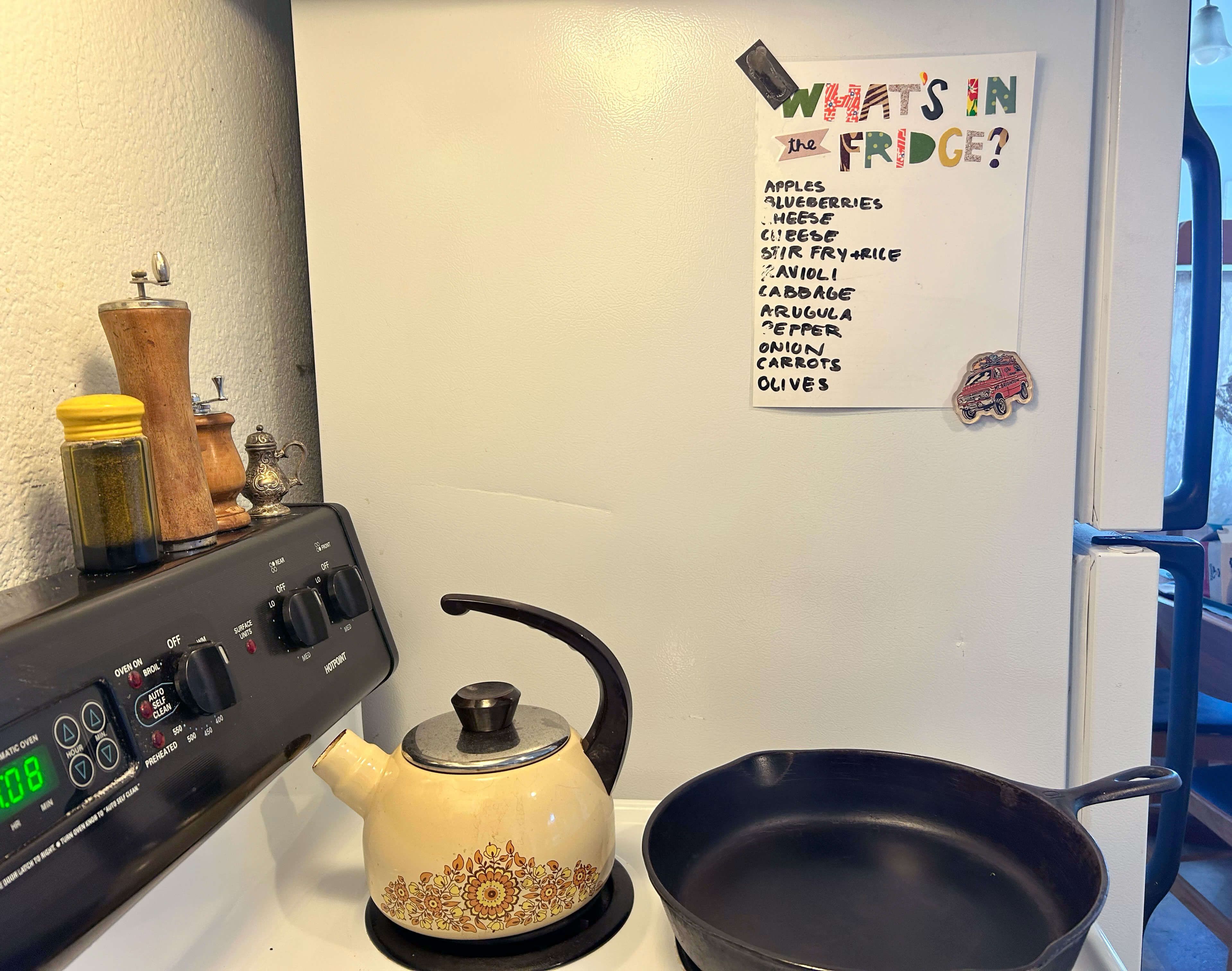
I keep a running list of fresh fruits and vegetables, as well as any leftovers, on the fridge as a visual reminder so that I don’t forget what needs to be eaten, and so that everyone in my household knows what needs to be eaten before purchasing new food.
This list helps my family know what’s available for cooking and eating before going out and buying groceries or cooking a new meal. Using what exists is important before sourcing anything new.
I created my own “what’s in the fridge list” and laminated it to use with a dry erase marker. You could also use a chalkboard dry erase board or a piece of scratch paper in a notebook that lives on your counter and gets updated every week.
Start a Food Waste Log.
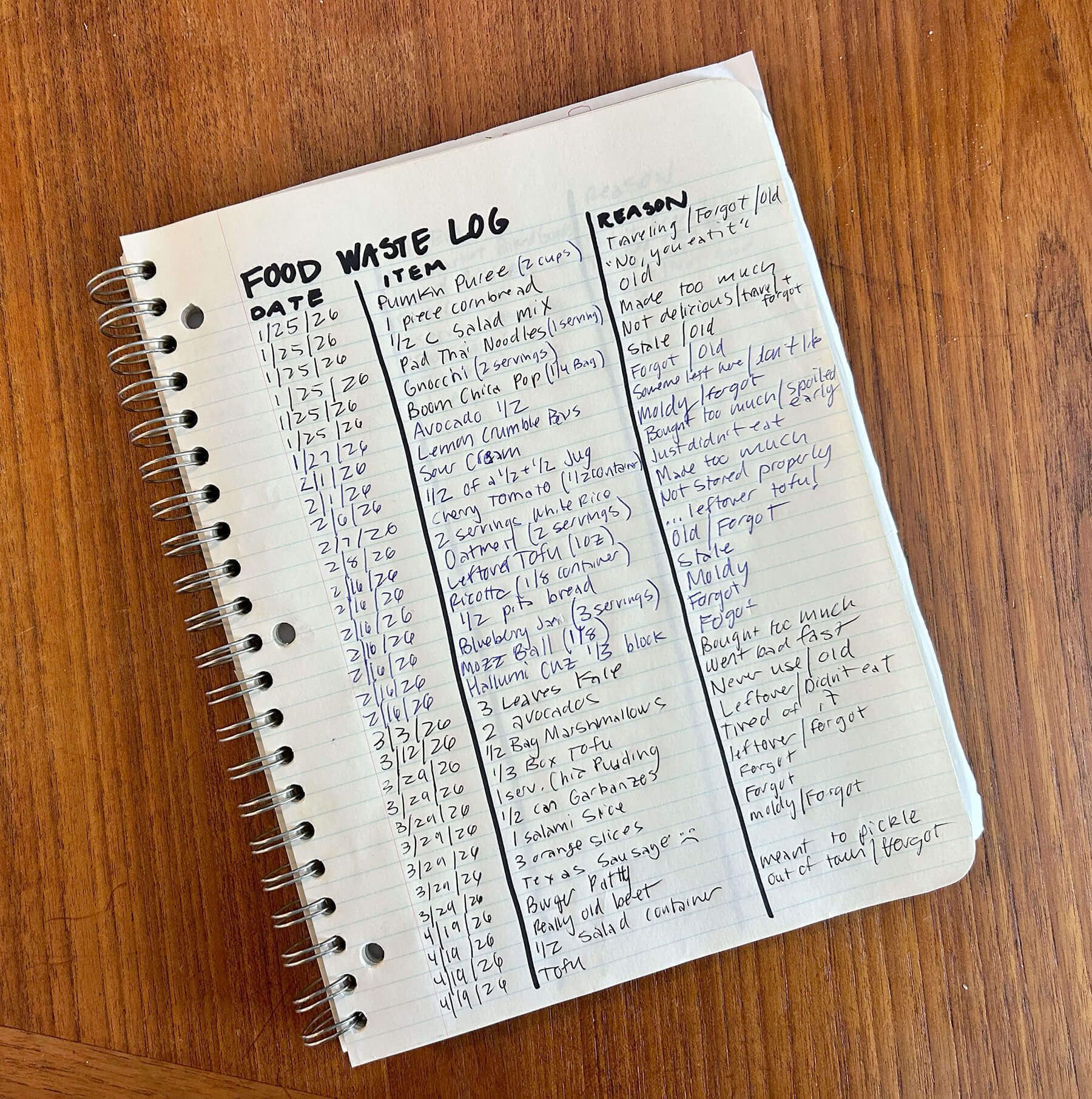
This one can mentally hurt, and sometimes I call it the “Toss of Shame.” Yes, the list is supposed to make you feel a little guilty about your food waste but the intention is to take inventory and make adjustments and improvements as you go.
The log is a catalog of any food that gets wasted, compiled in one place. Each time I add something to the list feels like salt in the already gaping wound I have about the environment and climate, but the reality is, this log helped me recognize patterns in the types of food I was wasting and why I was wasting them.
Knowing the repeat offenders – the stir fry that I got tired of eating after day three, the tofu which is only eaten by me and typically in small amounts, and that expensive cheese that molded because I was saving that last morsel for a really special occasion that never happened like I wanted it to –helps me understand what changes needed to be made in order to avoid future waste.
Try keeping a log even if it’s only for a week at first to make notes of your household’s patterns. Then try two weeks, then three, and work up to a month. Or go all in and start with tracking a month! Monitor what's repeatedly getting thrown away. Are you making too much of one meal or buying too much of one type of produce? What foods are never on your list (eat more of that!)?
Labels labels labels!
Make sure everyone in your house knows what everything is, what it’s for, and how old the food item is. Sometimes something perfectly delicious can get lost in a crowded fridge and a simple label can be a great reminder and a meal lifesaver. Labels can be really helpful for busy families too.
The goal is when any person opens your fridge, they know at a glance what’s ready to eat.
I use a roll of colorful painter’s tape or brightly colored sticky notes and a big, bold sharpie –these are highly visible, easy to write on, and they take minimal effort to remove them from containers once they’re empty.
Now, I know what you may be thinking –isn’t this a waste then of tape and sticky notes? Yes, but these are tools to decrease overall waste and for me, I think it’s worth it.
Have a food rescue toolbox.
Knowing what to do with excess food is an important step to avoiding food waste. Having awareness of what you can do with excess food will decrease food waste in the long run. I’ve found it’s best to have a couple of options in place for when you start feeling something is at risk of heading to the trash.
- Fill your freezer. Not going to finish that spinach? Blanch and freeze it and then use it in soups or smoothies. Not going to finish those eggs before you leave on vacation? Crack em’ and make and freeze a veggie frittata. Your future self will thank you on a busy week when you have premade meals on hand.
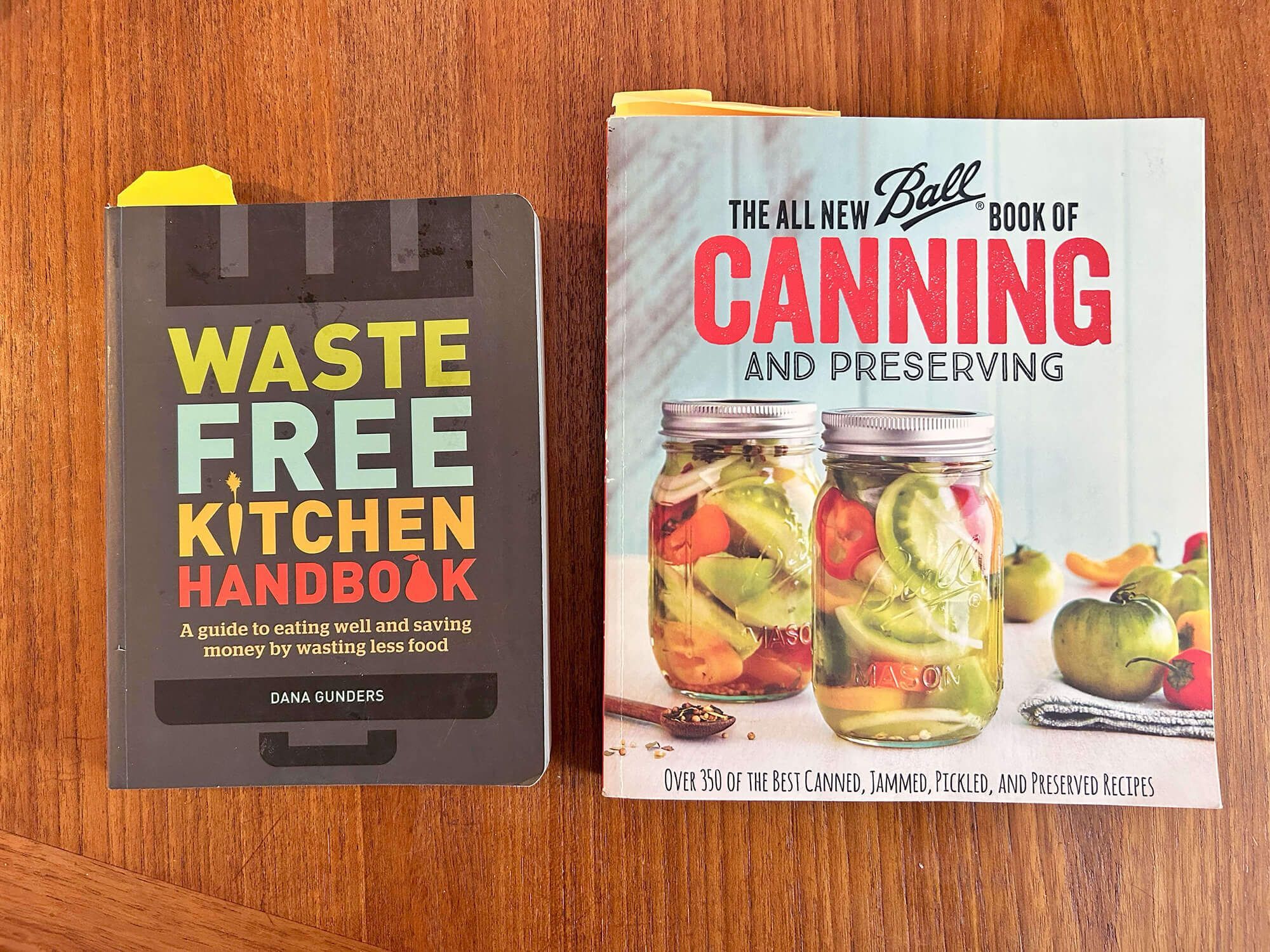
- Learn simple preservation methods. Canning, freezing, pickling, and dehydrating are all great ways to keep food longer. I’m personally not confident in my canning abilities, so I stick to refrigerator pickling, dehydrating, and freezing. There’s always room for improvement!
- Normalize sharing food with friends and gifting food to neighbors. The day you made too much spaghetti might be the day your friend had to work late and came home to an empty fridge. That neighbor who lives solo now might want the rest of your meatloaf for dinner because cooking for one person can be tough. It can’t hurt to have a few friends on hand and know your neighbors so that you can message about extra veggies or leftovers.
- Upcycle your leftovers. One of the top offenders on my Toss of Shame list is that I “got tired of eating the name of the thing that I made and after day 4, I’m just over it.” To remedy this, I’ve started getting creative with turning leftovers into a new dish. Leftover noodles can become pasta frittata (my friend’s mom used to make this for soccer team dinners in high school and I still remember how delicious it tasted), white rice into rice pudding, roasted potatoes into an omelet –there are many ways to reuse leftovers with a little creativity and effort!
- Find a little free pantry. Similar to a Little Free Library, little free pantries are community-built and -run boxes or shelves placed in neighborhoods for people to share food with those who need it. Look for one in your neighborhood and learn about what types of food donations are acceptable. And then, utilize it.
As consumers, we don’t have much control over the monstrous full-scale food system and the items that go to waste in places such as restaurants and grocery stores, or during the transportation and production processes. However, grassroots efforts in our own homes and communities can help change the conversation about how we use and value food.
Reducing waste can be one way of showing gratitude and appreciation for having access to healthy food, the farmers and ranchers that produce the food we eat, the land that provides for us, and the people we get to share meals with.
Now you try!
October is Zero Waste Month, so it’s a great time to start your waste-less-food journey. I’d love to hear your favorite food-saving tips, what’s worked or hasn’t worked for you, and something new you’re excited to try. Send me an email [email protected] – I read every one!