We know that two things are true:
- Every choice that we make has an impact on our environment.
- Food, whether foraged or farmed, has been a necessary resource since the beginning of life itself.
Given these two truths, how do we make the best choices to get the necessary food to the greatest amount of people, but with minimal environmental impact? Welcome to the first part in this series on The Race to Zero Food Waste.
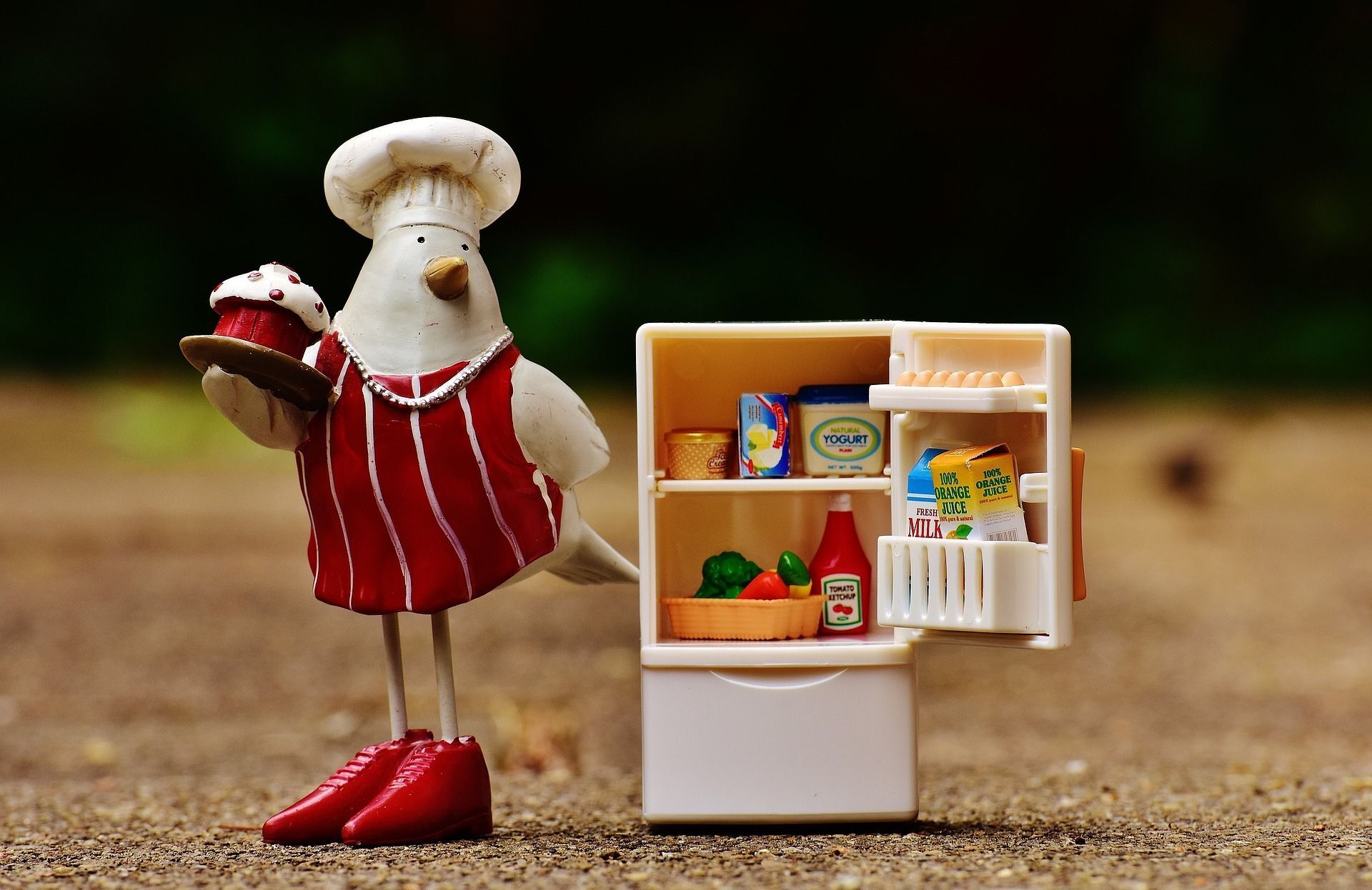
Image from Pixabay
How much food waste?!
Between the waste generated in the process of getting food to our tables and the waste generated when we let that nice asparagus go bad in the back of the fridge, the current system sends “between 30-40 percent of the food supply [in the US]” to the trash, according to the USDA. That’s more than a hundred billion pounds of food per year that could be used to feed people or animals!
Can you visualize a hundred billion pounds of food? It’s the weight of:
~100 million polar bears (That’s more than 300 times the entire global population of polar bears!)
~16.5 million Ford F350s (That’s more than the number of vehicles registered in California in 2019!)
~the water in 18,000 Olympic-size swimming pools (that’s ~560 miles from end to end, which is like driving from Pittsburgh to Nashville!)
Now let’s visualize some solutions to this food waste problem.
Food prep and tips from the Zero Waste Chef.
Recipes and meal planning can seem like a daunting task, but even having a general idea of meals for your next few days can help improve your efficiency and reduce any potential food waste. R20W recently published an interview video with guest Anne-Marie Bonneau of the Zero Waste Chef where she gave us some good tips on getting to zero food waste!
-Have cooked grains on hand – it can be easy to make another meal with next-day rice!
-Don’t be intimidated, get your sourdough starter going!
-Share the labor and love of food with your community – many hands make light work, as they say! There’s nothing like sharing a meal together to build community closeness.
More decentralized markets: small, frequent shopping trips.
Buying less with each trip to the grocery store is a way to reduce waste at your personal source point. When a quick trip to the market is made more convenient, we are more likely to buy what we need for a few days instead of a few weeks. Huge supermarkets with massive parking lots can be stressful, not to mention far away. This is just another way that walkable and bikeable communities can lead to a more sustainable world. It means a smaller environmental footprint for markets, for you, and for your food.
In sight, in mind: Your new leftovers strategy.
Bigger fridges at home and grocery stores that are further away mean that we are stocking up rather than making quick daily trips for the things we need. It also means that things are more easily hidden from view and forgotten about. How many sad perishables are hiding out in your vegetable drawer as you read this? I’ll confess: Despite my best efforts, I occasionally end up forgetting about (or ignoring) a repurposed yogurt tub of leftovers. These are habits that we all need to work on!
Here are a few things you might consider trying out:
- A system to organize your fridge based on what needs to be eaten first. EAT ME at the top!
- Think about the psychology of filling up the fridge. Does it need to be full for you to have enough to eat? Depending on the size of your household and your fridge, it may be a good idea to get used to seeing a sparse fridge, or even downsize (second-hand if possible!). An overfull fridge can also lead to uneven cooling, causing food to go bad faster than if it were spaced out.
- Use up those condiments! Could you make do with one or two salad dressings at a time? Alternate buying types of sauces? Really let the jar get empty before you restock?
-Reduce your options and thus your consumption: make tea or lemonade instead of both?
Remember, a carrot is not just a carrot.
Food waste is not just the floppy carrot that has become inedible, it’s also all the embodied energy that went into growing that carrot. Depending on where it was grown, getting that carrot to market could include systems of irrigation, tilling, pesticides, tractors, refrigeration, trucks, and/or planes. All of these mean that putting an old carrot in your landfill trash also means sending the embodied energy resources to the landfill. If composting is available to you, it’s clearly the better option. However, composting facilities require energy, too!
The best thing to do is to eat what you bring home. If you find that that’s really hard, just try bringing home less. You don’t have to overthink it, just remember the first of the three Rs: Reduce, Reuse, Recycle and we’ll achieve zero food waste together.
Want to try out some additional climate-friendly swaps? Check out R20W’s Climate Action Blog here.
This article was written by R20W Strategic Development Consultant Hayden Sloan.