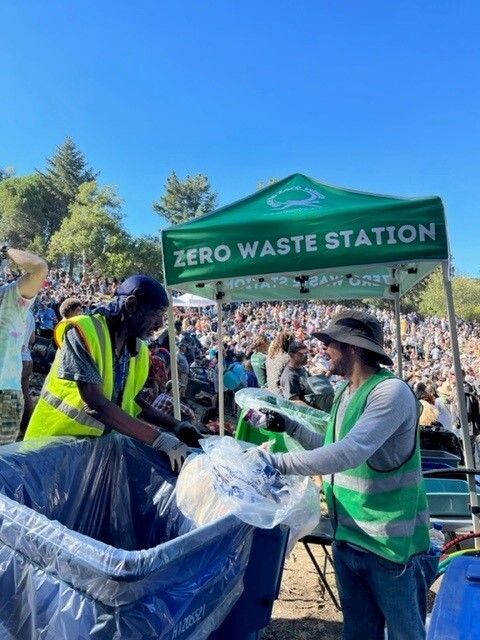
Much of what we call ”waste” are potential resources for new products. Zero waste practices aim to first minimize the production of discards; second, direct the discards we have to reuse, recycling, or composting; and finally, to manage what we have left as responsibly as possible. Aggressive zero waste strategies can recover the resource value of more than 90% of what we discard.
Zero waste is also a powerful economic engine. It is the critical component in a circular economy. By reducing the creation of discards, i.e. through waste avoidance, a person or business saves money by avoiding unnecessary products, packaging, and stuff. Reusing, composting, and recycling not only preserves the economic and environmental value of the original resource(s) used to create the item; it creates jobs in recovery and re-manufacturing. Reuse, compost, and recycle alternatives also avoid the cost of disposal in landfills or incinerators.
Zero Waste efforts must also focus on the design of products and manufacturing processes to ensure that all of this stuff is created with an awareness of what will happen to it when it becomes a discard. Zero Waste principles can be used to limit the toxicity of products and processes, further improving the environmental health of our communities.