I've spent much of my life on the move. Packing for travel used to mean filling two large suitcases until they bulged at the seams.
One toss on the conveyor belt too rough, and they might just split right open. My mind would always come up with reasons to take this or that "just in case." Then, each trip back home would be stuffed with souvenirs and gifts, as if I was trying to bring the whole country back with me.
That all began to change when I started backpacking.
With just a pack on my shoulders, buckled at my navel and resting above my hips, I no longer had to fuss with bulky suitcases. But it also meant that I had to redefine for myself what it meant to be "prepared." It didn't mean packing every specific item I might possibly need. Instead, it forced me to hone my skills in improvising on-the-go, packing multi-use items and mix-and-match outfits, and using the resources around me to get things done.
Every so often, I could restock and leave items I didn't need for the next leg of my trip at a hostel. For the most part, though, I learnt to simply do without many of the amenities I was used to.
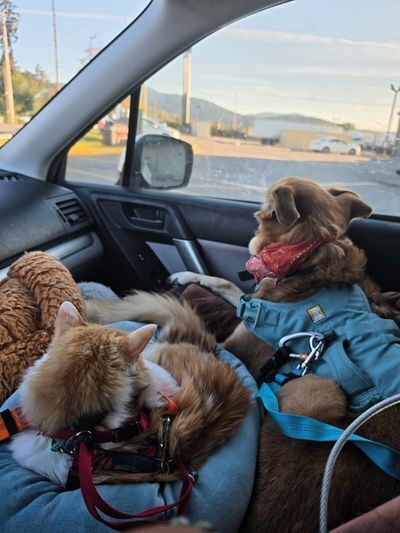
I eventually bought a van and later transitioned to my Subaru Forester, car camping with my dog and cat across the United States, through deserts and mountains, coastal regions, and prairies. I would soon find out that life on the road presented its own challenges.
Living on the road presents unique challenges to reducing waste.
Living on the road with little to zero waste –whether in your car, van, or RV –is a lot harder than you think. Truck stops and travel centers offer accessible food and necessities, buy they're often prepackaged in single-use plastics. And fully package-free food is hard to come by. Even freshly cooked breakfast burritos are sold wrapped in aluminum foil.
Living on the road means you often pack travel-sized laundry detergent or toiletries –goods that have a very high plastic to product ratio. It's also far easier to buy plastic water jugs to toss in the recycling bin and hope that it's going to be reincarnated as your next tote bag, instead of still ending up in a landfill, than it is to buy and consistently clean and reuse a heavy, bulkier aquatainer.
But if you can't reduce 100% of your waste, there are still plenty of ways to limit it and do your part to keep the greater environment after and cleaner.
Here’s what I do to produce less waste as I live out of my car:
Food & Eating:
- Travel with your own thermos, straws, and utensils. Gas stations like Maverik and travel centers often sell reusable thermoses and will often give you a discount on hot and cold drinks and refills.
- I personally travel with only one set of eating utensils, a glass microwaveable bowl with a secure lid, and stoneware plate. Not only did it save space, but it can reduce food and water waste.
- I have a pint-sized mini fridge to cool and store items as needed, and I can reheat them in my 12V lunchbox "microwave". If you're on a budget and not preparing your own home-cooked meals, you can always find canned soup at most gas stations and heat them up.
Washing up:
- I always bring a thin scrubbing brush and bottle brush, a collapsible sink, and a rechargeable faucet that can pour water from a water jug, bucket, or aquatainer. This way, I can wash dishes and clothes on-the-go.
- Use bar soap to reduce plastic packaging, and you'll often find locally-made hand soaps. You can also find bar soaps options for shampoos, conditioners, and body wash bars.
- When washing clothes, you can buy laundry detergent sheets or buy individual boxes of powder detergent at the laundromat. Not only is this often cheaper than buying a large jug of liquid detergent, but it saves you a ton of space while traveling and reduces plastic waste. I personally buy laundry sanitizer, which, unfortunately, seems to be limited to plastic bottles. But I try to offset that with other choices!
- Reduce paper towel and napkin use by keeping a few of your own hand towels and reusable rags. You don't have to wait until you get to a laundromat to wash them. Most, if not all, states have several rest areas off the highway in between major cities with clean restrooms with flushing toilets and running water. You can easily hand wash these items to reuse, saving tons of napkins and paper towels.
Pets:
- If you have pets with you, don't bother with bringing your own plastic bottles of shampoo and conditioner or grooming tools. Did you know that Tractor Supply stores have pet wash areas that provide fresh towels, brushes and combs, shampoo, and conditioner (including skin sensitive oatmeal shampoo)? For $9.99 per pet, they provide a self-service pet wash room with large metal wash tubs with doors and ramps, dryers, and drying tables to keep your four-legged family clean and dry on the road. I've taken both my dog and cat there, and it was so quick and easy to use.
Gear:
- When buying necessary electronics, there are often options with single-use batteries and / or USB ports for rechargeable batteries. Reduce waste by selecting the items with USB ports, or use rechargeable batteries and a multi-size battery charger (for AAA, AA, C, D, and 9V batteries).
- While still few and far between, you can find stores that use little-to-no packaging for their products. Content creator Robin Greenfield provides a list of Zero Waste Shops across the United States. Search for food co-ops and farmers’ markets as you explore new places. It's also a great way to expose yourself to local culture and get to know an area.
- Finally, many cities have consignment / used goods stores for clothing and outdoor gear that help you to both reduce waste and save money. Stores like The Evergreen Exchange in Spokane, Washington and Second Wind Sports in Bozeman, Montana (and several other locations across the United States) offer used items in good condition. Sites like ThriftAtlas and Consignment Shop Finder have comprehensive directories of used goods stores across the U.S. I've also personally utilized Facebook Marketplace on the road to find secondhand gear, like the bear canister I just bought from a fellow Facebook user in Post Falls, Idaho (code to Coeur d'Alene, Idaho). Just remember to always use caution and be safe when meeting with strangers. If you don't feel safe going to their home, you can always suggest meeting at a public, busy place.
Use zero waste as a guide, not a rulebook.
Always remember that living and traveling with the goal of zero waste is about being a conscious consumer and reducing as much waste as you can. You might not be able to fulfill the goal of literal zero waste (who can?!), but we can all work hard to make a difference and inspire others to do the same.
AI Transparency Statement: Lalini and Hayden confirm that No AI was used in writing, editing, or publishing this blog. 21 Oct 2026.